Voice AI pilot playbook for contact centres
Quick answer: A voice AI pilot should answer whether the system can complete a defined customer task safely and at acceptable cost under representative call conditions. Start with one or two high-volume intents, build the flow and handoff rules before live traffic, then release in stages and use an outcome scorecard.
A voice AI pilot should answer a commercial decision: can this system complete a defined customer task safely, at an acceptable cost, under representative call conditions? A pilot that only demonstrates natural conversation does not answer it.
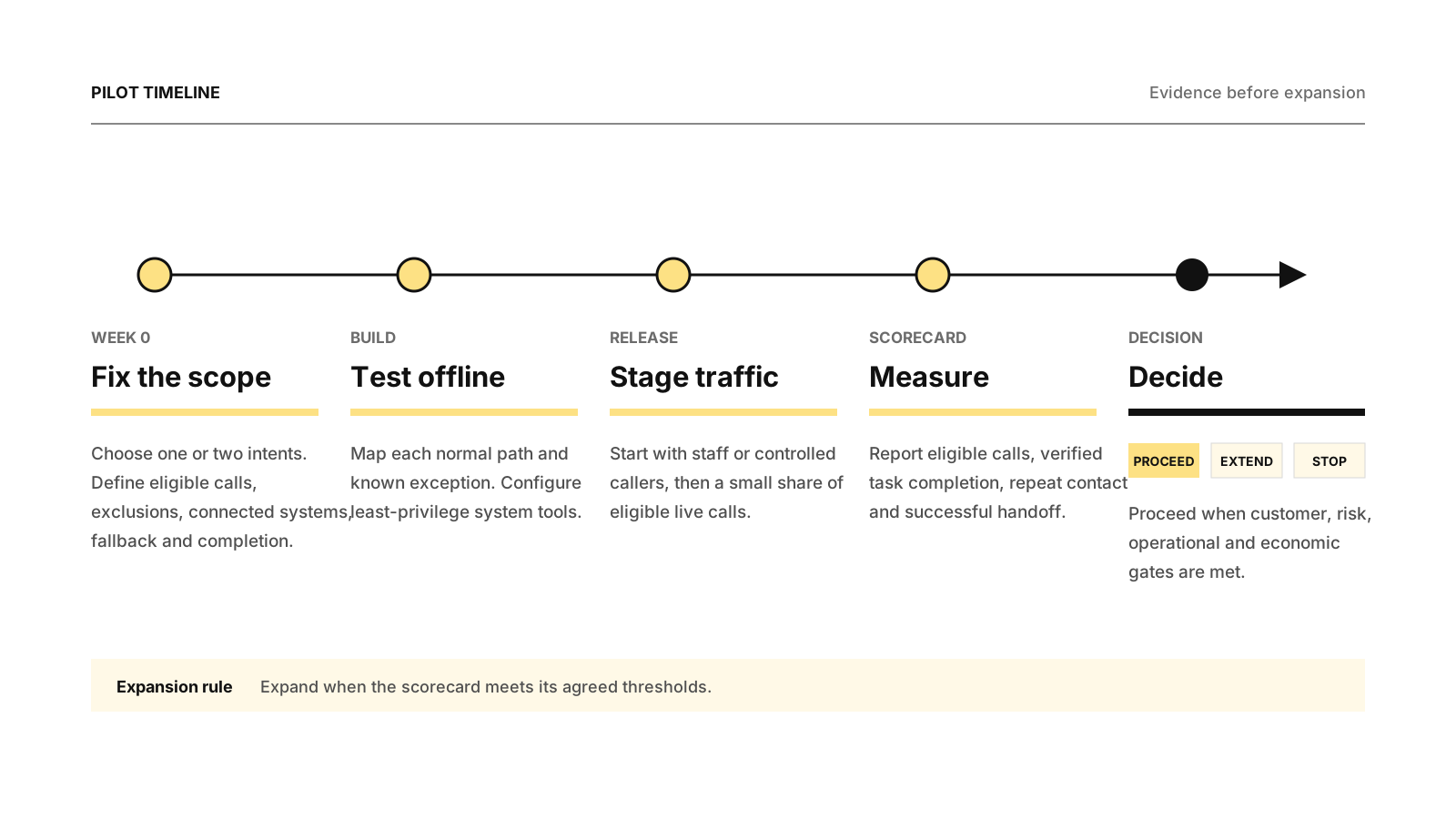
What should you do in week 0 to fix the scope?
Choose one or two high-volume call intents. Define the completed task, the data sources needed, and the failure criteria. The team should agree on what success looks like before any code is written.
Why build the voice AI before live traffic?
Build the voice flow, integrations, and handoff rules using historical recordings and test calls. Validate that the system can reach the completed task repeatedly. Do not expose the workflow to live callers until it passes internal quality checks.
How should you release traffic in stages?
Start with a small percentage of eligible calls. Monitor task completion, transfer reasons, and customer feedback daily. Expand the volume only when the metrics stay within the agreed guardrails.
What belongs on an outcome scorecard?
Track task completion rate, cost per completed task, average handling time after transfer, customer effort score, and compliance with handoff rules. See our guide on calculating voice AI cost per resolution.
How do you make the pilot decision?
At the end of the pilot, decide whether to expand, redesign, or stop. A well-scoped pilot produces evidence, not just enthusiasm.
Bring two candidate intents and a recent call-reason report to a Butter Labs pilot-scoping session.
Reviewed 2026-07-27