Voice AI platform for contact centres
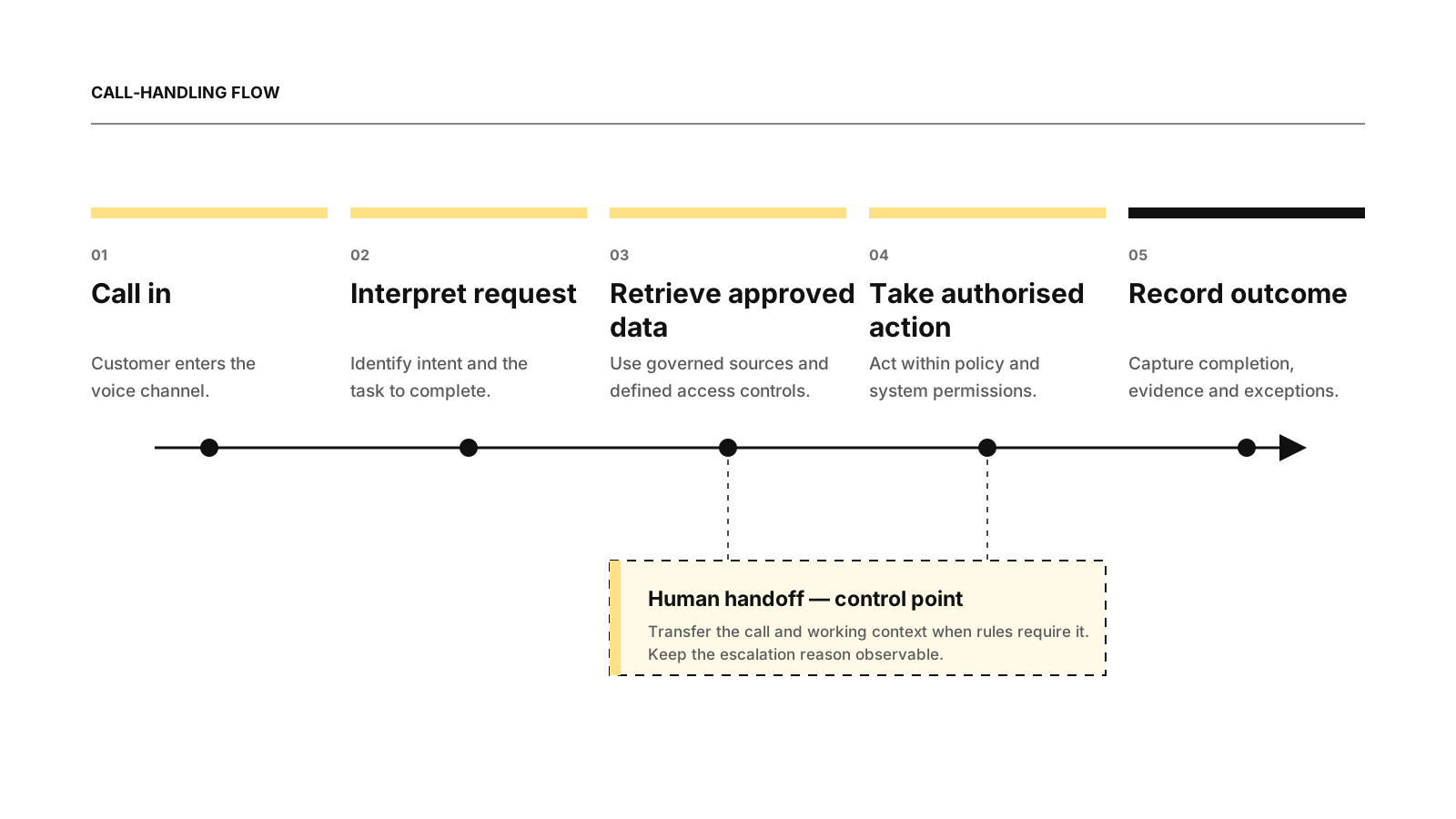
Quick answer: Enterprise voice AI answers a phone call, interprets the request, retrieves approved data, takes an authorised action and records the outcome. We start with high-volume, low-discretion tasks such as balance enquiries or payment status, and keep human handoff as a control.
Enterprise voice AI answers a phone call, interprets the caller's request, retrieves approved data, takes an authorised action and records the outcome. In a contact centre, the useful unit is a completed task: a bill explained, a payment taken, an appointment changed or an outage status provided.
How does a voice AI agent handle a call?
The caller speaks naturally. The system converts speech to text, identifies the intent, checks the account or policy data it is allowed to access, and either completes the task or transfers the call to a human agent with context.
Which workflows fit first?
High-volume, low-discretion tasks are the best starting point: balance enquiries, appointment changes, meter readings, payment status, or simple order updates. These calls have clear inputs, approved data sources, and a defined completed task.
Why is human handoff part of the product?
Handoff is not a failure mode. It is a control. The agent should know why the call was transferred, what has already been verified, and what the customer still needs.
What architecture questions should buyers ask?
- Which systems does the voice AI need to read from or write to?
- Where is call audio, transcription and customer data stored?
- Who can access recordings and logs, and how is that access controlled?
- What happens when the model gives an incorrect or uncertain answer?
- How does the vendor report cost per completed task?
Why measure outcomes instead of pleasant conversations?
A useful pilot measures task completion rate, transfer quality, cost per completed task, and customer effort. We compare these against the same work handled by agents, using recent call-reason data as the baseline. Modelled savings can help size the opportunity, but they do not prove value. Only live calls under controlled conditions can do that. See our approach in the voice AI pilot playbook.
What does a practical first pilot look like?
A 30-day pilot with Butter Labs typically covers one or two candidate intents, a representative slice of live traffic, and an outcome scorecard agreed with the customer operations team.
Scope one or two candidate intents with Butter Labs.
Reviewed 2026-07-27